EP 305 - How should we talk about giving at church?
/
RSS Feed
Share
Link
Embed
We don’t give to rescue a budget. We give because Jesus is Lord. Giving is worship that forms us, fuels mission, and frees us from idolatry.
How do we talk about money without fear, guilt, or fundraising vibes? My aim is simple—to reframe giving as discipleship, not desperation. Jesus said we cannot serve God and money. Regular, sacrificial generosity is one of God’s gifts to free our hearts from lesser masters and re-train our loves toward the kingdom.
Why This Matters
Fear-based appeals miss the heart of discipleship.
Avoid “dues for services.” The church is a family on mission, not a club with fees.
Kingdom urgency ≠ panic. God richly provides; we steward with faith and transparency.
My Story
Early in marriage, we could barely make ends meet. I fasted and prayed, and Matthew 6:33 kept pulling me back: seek first the kingdom. We started giving at a level that “pinched.” God used it to reorient our trust.
How I Teach It
Give as worship and formation, not compulsion.
Use the “pinch principle” (C. S. Lewis): if it never pinches, it may be too small.
Resist weaponizing percentages. For some, 10% isn’t sacrificial; for others, it’s crushing. Aim for cheerful, sacrificial faith.
Praise God for how he works through his people, rather than congratulating people for “their generosity.” We’re stewards, not owners.
Gospel Orientation for Replanters
Formation over fundraising: preach Christ as both reason and resource for generosity.
Identity before activity: call saints to live who they are in Christ.
Repentance and renewal: let the gospel confront control, nostalgia, and fear around money.
Pace with patience: teach, model, and testify toward a culture of openhandedness.
Practical Language Swap
From “We’re behind; please help” to “Here’s how God is at work among us—let’s respond in worship.”
Tell redemption stories, not revenue gaps.
Tie practices to promises: firstfruits, seasonal generosity, automation paired with God’s provision and the joy of cheerful giving.
Missions Vision
Connect giving moments to mission moments. Show how sacrificial gifts become mercy, mission, and formation—at home and to the nations.
EP 251 - Setting Effective Goals in Church Renewal (Part 2): Practical Insights with Brandon Moore
/
RSS Feed
Share
Link
Embed
In today’s episode, Brandon Moore is back with us to share some practical insights we discussed on setting and establishing goals as church renewal leaders.
Establishing clear goals is crucial for any church renewal leader. Goals help to keep the mission focused and the congregation aligned with the overarching vision of the church. Here are the main points we covered:
Starting with Evaluation: One consistent theme in our conversation was the importance of starting with an evaluation to define reality. Whether it’s leadership, ecclesiology, or missiology, the first step is to assess where your church currently stands.
Here’s how you can break it down:
Leadership (Shepherding and Strategy): – Evaluate your current leadership team and their effectiveness. Ask questions like: Who are the potential leaders? Who can you pour into?
Ecclesiology (Church Maturity): – Assess the spiritual maturity of the church. – Measure factors like joy in worship, unity in the congregation, and compassionate outreach.
Missiology (Mission and Outreach): – Get to know your community. Conduct surveys or simply meet with community leaders. – Assess how well your church’s mission aligns with meeting community needs.
Clarify Direction: Once you’ve evaluated your current situation, the next step is to clarify the direction.
Vision and Mission: Ensure that your church’s vision and mission statements are not just words on a napkin but are lived out and understood by the congregation. – Realign your vision and mission if they do not clearly inform your strategic objectives.
Set Leadership Goals: Identify key leadership goals, such as developing and mentoring new leaders. – Establish clear objectives for equipping, resourcing, and encouraging your leadership team.
Define Ecclesiology Goals: Focus on church maturity. For instance, set goals to improve areas in need, such as increasing unity or encouraging more compassionate actions within your community.
Set Missiology Goals: Based on your community assessment, set actionable goals to reach out and serve your community better. – Prioritize engaging with your community beyond the church walls.
Implementation: Now that you have a clear direction, it’s time to set those goals into action:
Create a Quarterly Plan: Break down your goals into manageable quarterly actions.
For instance:
Quarter 1: Evaluate and define the reality of your current leadership, health, and community engagement.
Quarter 2: Clarify and refine your church’s vision, mission, and set specific objectives.
Quarter 3-4: Implement the strategies and start executing your goals.
Build a Team: Work with a supportive team throughout this process. Involving others helps to distribute responsibilities and creates a sense of ownership.
Regular Check-Ins: Consistently revisit and review your goals and progress. Adjust as necessary to stay on track.
Practical Examples Here are some practical examples of the goals we discussed:
Leadership Goal: Month 1: Identify three potential leaders. – Month 2: Meet with each potential leader to gauge their willingness to grow. – Month 3: Develop a plan to train and develop these leaders.
Ecclesiology Goal: Focus on increasing church unity. Plan small groups or community events that encourage members to connect more deeply.
Missiology Goal: Set up quarterly community service projects based on the needs identified during your community assessment.
Closing Thoughts: Setting effective goals in church renewal involves evaluating your current situation, clarifying your direction, and implementing actionable steps. These goals should align with your church’s vision and mission, fostering leadership, ecclesiology, and missiology growth. By taking intentional steps and involving your team, you can make significant strides toward a healthier and more dynamic church community. I hope this episode provides a practical framework to start setting and achieving your church renewal goals. If you have any tips or experiences to share, please let us know. Let’s continue this journey of replanting and renewing our churches, one goal at a time!
EP 247 - Replanting when The Mission Field Changes with Frederick Clement
/
RSS Feed
Share
Link
Embed
In this episode of the Replant Bootcamp, we are joined by Fred Clement from One Family Church in Dayton, Ohio, who shares his experiences and challenges in replanting a church. Fred talks about the transition from Meadowdale Baptist Church to One Family Church, the importance of engaging the community, and maintaining relationships established by the previous congregation. He also addresses the cultural and demographic shifts within the community and how they have impacted the church. Fred emphasizes intentional evangelism and creating a culture that aligns with the mission of God. Listeners will also hear about Fred’s personal journey and strategies for leading a diverse congregation through challenging times.
EP 239 - Hitting the Healthy Church Target with Brandon Moore

/
RSS Feed
Share
Link
Embed
In this episode of the Replant Bootcamp, we reconnect with Brandon, a former guest and a recent addition to the Replant team, who shares his journey from working with the Missouri Baptist Convention to joining the Replant team and moving towards replanting a church in Knoxville, Tennessee. Brandon discusses his experience and insights on church revitalization and replanting in Missouri, emphasizing the strategic role of associational leaders and state convention leaders in catalyzing church movement within their states.
He highlights the critical need for strong leadership and healthy church structures, focusing on the three identities of the church (worshipers of God, family in Christ, and missionaries to the world), foundational elements (Gospel, Scripture, and Prayer), and structural aspects (leadership, membership, and discipleship) essential for church health.
00:00 Welcome Back to the Bootcamp!
00:54 Introducing Brandon: A Journey from Missouri to Replant Team
01:11 Brandon’s Personal and Professional Shifts
02:10 The Mission in Knoxville: Replanting with a Vision
05:25 The Importance of Church Health and Identity
11:28 Defining Church Health: Identities, Foundations, and Structures
23:53 Practical Steps for Church Revitalization and Replanting
27:35 Closing Prayer for Healthy, God-Glorifying Churches
EP 131 - CULTIVATING DESIRE IN CULTURE CHANGE with Keelan Cook
/
RSS Feed
Share
Link
Embed
While the boys were in Atlanta for the annual AMS Replant Practitioner Lab they took some time to record several episodes with some of the plenary speakers. Keelan Cook is OG for the Replant Practitioner Lab and the OG Replant Bootcamp Missiologist.
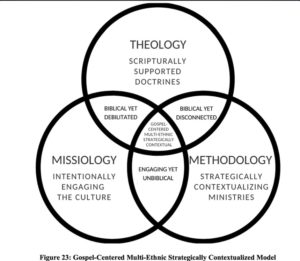
In the previous episode with Dr. Casey “The Chin” Williams the guys discussed the importance of missions methodology being informed first by right theology and then right missiology.
Theology > Missiology > Methodology
But when it comes to methodology, what is the best way to get people to act on the call we all have to be missionaries? Good information won’t be enough. There has to be a desire, there has to be affection.
In this episode, Keelan Cook helps us think through the integrity of our messaging and the ways that we learn.
Developing desire is the most important aspect of navigating outreach.
Integrity of message:
MACRO-LEVEL — Broadcast level that is most likely to hit the whole church at once. Think sermons, website, emails, etc.
MESO-LEVEL (mid-level) — Smaller groupings of people within the church where much equipping and fellowshipping takes place. Think sunday school classes, small groups etc.
MICRO-LEVEL — Interpersonal interaction. Think the foyer prior to corporate worship, or lunch following the service
LOVE BY DOING
Learning domains
Cognitive (Head) – Knowledge and concepts
Affective (Heart) – Emotional buy-in
Behavioral (Hands) – Activity-based
“In 1964 Leon Festinger’s research led him to advance the radical notion that the knowledge–behaviour relationship actually works the other way around – that is, people are more likely to behave their way into thinking than think their way into behaving” – Shaw, Transforming Theological Education, 2014.
Your website is part of your church’s mission to reach the community-is it working? Connect with our great partner, One Eighty Digital and get their help to make sure your website both reflects who your church is and what you are about.
Drop us a line, send us a voicemail-we’d love to hear about your story in reaching the community God has placed you within.
We’re back at the Bootcamp and ready for the next episode. Joining us again is, Dr. Casey Williams, this time we’re talking about how to develop a missionary mindset in your church. This is no small task, listen in as Casey explains how to move your congregation toward mission.
Start with Theology – what does God say about the church and mission? Be careful to ensure that the most basic and simple and biblical doctrines and definitions are shaping your understanding.
Next Consider Context – where has God placed your church in the community? What do the demographics right around your church reveal? How do you begin to know your neighbors and reach them?
Finally, Focus on Methodology – based on the previous two steps, prayerfully consider with your leaders what are the most likely steps you should take in seeking to reach your community.
Check out this helpful chart that Casey shared with us.
There are some really solid gems here in this EP, listen to it all, consult the show notes and consider sitting down with your leaders and beginning a process of seeking God as you fulfill the mandate to reach your community for Christ.
Your website is part of your church’s mission to reach the community-is it working? Connect with our great partner, One Eighty Digital and get their help to make sure your website both reflects who your church is and what you are about.
Drop us a line, send us a voicemail-we’d love to hear about your story in reaching the community God has placed you within.
EPISODE #80 - CHURCH TRENDS WITH KEELAN COOK PART 2
/
RSS Feed
Share
Link
Embed
The guys picked up where they left off discussing the Netflixification of the Church and how the on demand nature of streaming has impacted the way people are engaging with the Church.
Streaming Church Content due to convenience – probably not a good motive
Streaming due to life circumstances and need – a periodic necessity and gift but not long-term solution
The pandemic has given us a gift-in that we can clarify with our congregation what does it mean to be with the church.
We can and should evaluate everything we are doing and help our folks assess their engagement with it.
Our goal, as Pastors is to help our congregation understand the value of embodied presence (gathered worship)
Preach on the value of embodied presence
Connect with your congregation
Elevate connection through groups
Lead others to engage in shepherding along with you – “the one another’s”
Restructure the embodied presence by changing your liturgy
EPISODE #79 - Church Trends with Keelan Cook Part 1
/
RSS Feed
Share
Link
Embed
Jimbo does a solid favor for Bob and Kyle of the Replant team and then they guys get down to the serious business reflecting on trends in the church with our good friend, Keelan Cook, from the Union Baptist Association.
Church gatherings have fundamentally changed through the use of media (online, drive-in, Facebook, Youtube etc.)
The “Netflixification” of church is occuring, people are watching worship services when it fits in their schedule – not when the church is live streaming the in person gathering
There are positives and negatives with this practice (homebound, special needs populations)
Consumerism and Self-focused decisions are on the rise
“Embodied Practice” = we expect you to be present for gathered worship is going to be a tension point for us as we moved forward.
We have to evaluate every piece of media we put on social media and ask: “Who is this for?”
What churches put online should shift to be a primary means of outreach, shared by church members
Pastors and Leaders will need to work hard to transition their folks back to the gathering as a practice.
Check out part 2 next week.
See where Jimbo stopped to pick up Dr. Pepper @ the great travel stop Bucee’s – check it out!
Get the website help you need, connect with our great sponsor One Eighty Digital they’ll get you up and running in the right direction.
Show notes powered by Descript are an approximation of the verbal content, consult podcast audio for accuracy