Respect in Leadership- Part Four of the Godly Leadership Series
R-e-s-p-e-c-t
This is part four of a series of five on the characteristics of Godly leaders. Part one, Humility, can be found here, Part two, Goodwill, can be found here, and Part Three, Empathy, can be found here.
My husband started his ministry as a Youth Pastor. We loved working with youth. We found them to be hungry for the Gospel and for truth, and we genuinely enjoyed their goofy immaturity, especially as they tried so hard to be “adults.” We learned so much from the youth we served, but one lesson specifically sticks with us: the difference between positional authority and relational authority.
In positional authority, you have a person’s respect because of your position in their life. As adults, we are used to this authority because most of us have employers who are in the position to speak authoritatively in our lives. Many of us were also raised by parents who expected this type of respect. But in this generation, there is more value placed on relational authority, where a person’s respect is based on your relationship to them. You can’t speak authoritatively in their life unless they value your relationship with them.
We had many adults who volunteered in youth ministry who felt that the youth would respect them because they were parents or teachers, or simply because they were older– positional authority. But what we found is that teenagers responded much better to relational authority. We could earn their respect and the ability to speak truth in love to them when we had a relationship with them. Without it, we were just another adult annoying them with rules and expectations.
Watching this generational switch showed us something: leaders have to show respect to others before they can ever earn the respect of others.
Find Out What it Means to Me
Thankfully, God is not silent on the issue of respecting others. In Romans 12:10, Paul tells us that not only are we to love one another, we should “outdo one another in showing honor.” (ESV, italics mine) We are to respect each other more and more, almost as though respecting each other is a competition we are seeking to win. In 1 Peter, Peter tells us we must respect not only the good and gentle, but also the unjust (1 Peter 2:16-18). And in Matthew 22, Jesus himself instructs us that the greatest commandment is to love God, but the second is to love your neighbor as yourself.
Mankind is made in God’s image (Genesis 1:27), so when we are respecting others and honoring them, we are respecting Him. Thus the inverse is true– when we disrespect others, we have disrespected the image of God in them. This goes not only for how we treat people with our actions, but especially how we treat people with our words. Ephesians 4 reminds us that we are called to “bear with one another” in an effort to always strive toward unity. When we disrespect others through gossip or slander, we have failed to speak only what is “good for building up” and what gives grace to those who hear us. We must remember that respecting someone isn’t just about our treatment of them when they are around us, it’s also how we speak about them when they aren’t present.

Take Care (TCB)
In case you can’t tell, I haven’t been able to write this blog post without Aretha Franklin demanding respect in my head. I have always wondered what “TCB” meant, and after doing some research I found out it was her shorthand for “take care of business.” So here’s where we as leaders take care of the business of respecting others. There are five imperatives that we must follow if we are going to show the respect to others that we must as Godly leaders.
- Honor Others– When someone leaves a conversation with you, do you think they felt honored? Did you respect them as a fellow Christ bearer? Did you treat them with kindness or did you dismiss them with arrogance? A leader who shows respect to others will seek to serve others. How are you serving your team?
- Open Communication– Be intentional about how you speak to others. Your words have power, so what are they saying? Are you respectful in how you speak to people? In a recent podcast, Bob pointed out that honoring someone can even mean speaking in a way that honors their expectations toward change. While a visionary leader may want to say, “Let’s do XYZ,” someone who respects others will say, “What do you think about XYZ?” Communicating in a way that honors the opinions of those around you is a way to show that you respect their ideas.
- Disagree Productively– While you will certainly have times that you disagree with people, respecting them means that you remember the end goal is always unity. Romans 14 and 15 give us Godly ways to disagree with someone without disrespecting them. Instead of responding to disagreements with personal attacks, we need to ask questions and seek to understand why the other person sees it differently.
- Help Others Win– When we respect others, we value what they value. We don’t merely cheer them on, we actively encourage them, assisting in their ideas and goals where we can. We get excited when they win, not jealous or bitter. We respect their passions and hobbies. We show up for them.
- Express Gratitude– The people you serve in your congregation aren’t there because they have to be. While you do have positional authority as the Pastor, you must also cultivate relational authority by remembering that they have chosen to be a part of the church family that God is creating. You respect that choice by being grateful for them and for their contributions. Express that gratitude in various ways– not just verbally, but in writing or in small tokens of appreciation.
Respect- Just a Little Bit
George Foreman once wrote, “Without appreciation and respect for other people, true leadership becomes ineffective, if not impossible.” It’s not enough to merely have positional authority as Godly leaders. We must build relationships on mutual respect to be able to be effective leaders who can speak the truth (in love) to our congregations. We must learn to treat others the way we want to be treated, giving them grace and honoring their story.
Leaders who lead from a place of authority lead people to fear them more than respect them. True respect comes when a team can come together as a family and can acknowledge each person’s value within it, even when they disagree.
For further reading on Respect as a Godly Leader, see Designed to Lead by Erik Geiger, this episode of the Replant Bootcamp podcast, and this article on the need for Pastors to respect their congregations.

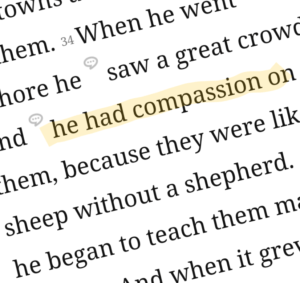


 The type of evangelism that our churches need to recapture is not an old program that needs to be resurfaced. It was the method of evangelism that Jesus used: daily, relational evangelism for every believer, every follower. The way that Jesus encouraged his followers in evangelistic engagement was part of what it meant to be a follower of Christ.
 In his third missionary journey, when Paul wrote this letter, he was looking back on many years of serving the Lord and sharing the gospel with others. As he looks back, he says that there is not anyone that comes into their path that they saw as just a person. How do we see people? Do we see them as flesh and bones, or do we recognize that God has people in our lives for a reason? I wonder if our heart for evangelism would change if our view of people changed.


 As the pastor opened up the envelope, he stood there, frozen. It was an empty envelope. Thinking maybe there had been a mistake, he called the church treasurer. “Hey _____, I just got home and we opened up the envelope I was given as a Christmas bonus and…”
 A church like this has some foundational issues. They are rejecting the biblical teaching of obedience to spiritual authority. When a Pastor has violated any code of conduct, shown evidence of sinful patterns, or put the people of God at risk of danger from false teaching or lack of care, these are real issues that should be addressed under the right structure. A church should be able to rely on their constitution and bylaws to go through the right process, and address any significant issues in the church.





 Our younger generation has been heavily influenced by technology. Every time I open up a social media app, I normally run across a sermon clip of a mega church speaker with skinny jeans and Nike Air Force ones, giving some catchy slogans about a scripture in the Bible. The catchphrases are not always bad, and are sometimes very powerful. But growing up observing that environment made me think that this type of ministry was the pinnacle of leadership.


 One of the best tools you can use is Google calendar or something similar. Every time I create a task, I get reminders throughout the day, both through my phone and email. Not all pastors or leaders have the privilege of having a secretary that manages calendar dates. Make sure when you work with your calendar you schedule time to rest, and schedule time for people who are close to you. As ministry leaders, we should be excellent stewards of our time, so schedule out your calendar with wisdom and consistency.
 If we aren’t taking a day to replenish and rest, we will become quickly exhausted, and wear out in this ministry. Taking a Sabbath means taking a day or a significant amount of time to restore your soul. And since God created rest and modeled rest, he will give us the strength to rest when we need.


 We see stewardship all the way back into the creation account, where God gave Adam the responsibility to care for creation by working and tending to the garden (Gen. 2:15). We are called to steward what God has given us for his glory, knowing that everything we have is His.